
Saliva Testing for Oral Health in Tacoma
A simple saliva sample can reveal what is happening beneath the surface of your gums. Dr. Nicole Ancich uses salivary diagnostics to identify the specific bacteria, viruses, and fungi driving periodontal disease, decay risk, and implant complications before symptoms become visible.
The test takes about a minute in the chair, requires no needles or blood draws, and returns lab results that let Dr. Ancich tailor your treatment to the pathogens actually present in your mouth rather than guessing with a broad-spectrum approach.
What the Test Measures
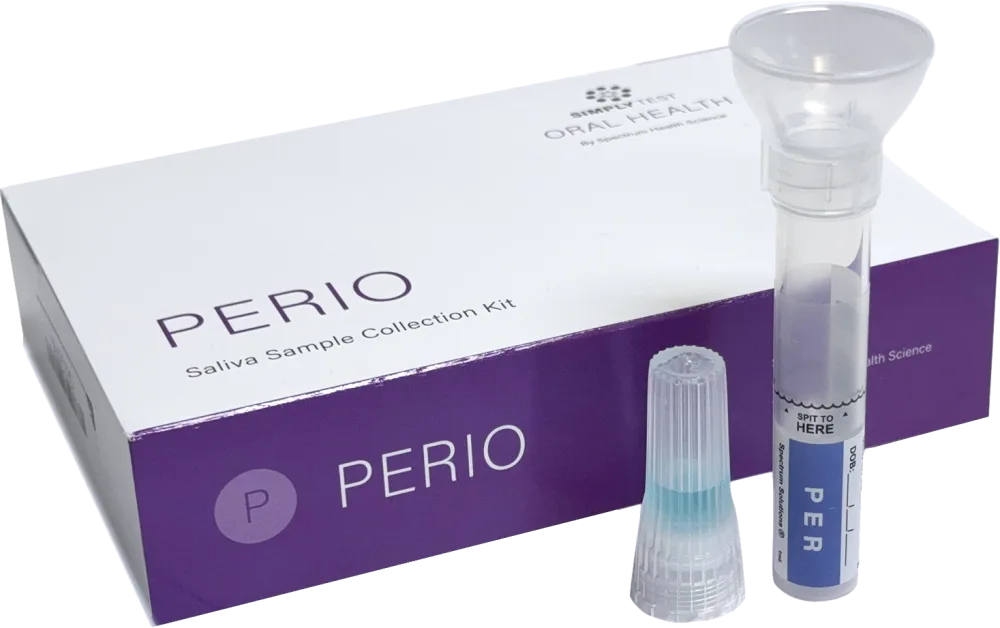
We use the SimplyTest PERIO salivary diagnostic, a DNA-based test processed by a CAP-accredited, CLIA-certified laboratory. A single saliva sample is analyzed for 17 oral targets across four categories:
Periodontal Pathogens
Nine bacteria across the Purple, Red, Orange, and Green complexes associated with progressive gum disease. These include P. gingivalis, T. denticola, T. forsythia, and A. actinomycetemcomitans, the bacteria most strongly linked to bone loss around teeth.
Cavity Risk
Streptococcus mutans and Streptococcus sanguinis, the primary bacteria responsible for tooth decay. Knowing your bacterial load helps us determine whether you need more aggressive preventive care or whether your current routine is working.
Viral Markers
HSV-1, HSV-2, Cytomegalovirus, and Epstein-Barr virus. Oral viral loads can contribute to tissue breakdown and complicate periodontal treatment. Identifying them changes how we manage your care.
Fungal and Implant Risk
Candida albicans (oral thrush and tissue inflammation) and Pseudomonas aeruginosa (associated with peri-implantitis and implant failure). Particularly relevant if you have dental implants or are planning implant restorations.
How the Test Works
Collection is simple. You provide a saliva sample in the office, which takes about a minute. There are no needles, no blood draws, and no discomfort. The sample is stored at room temperature in the collection device and shipped to Alimetrix, a CAP-accredited and CLIA-certified laboratory.
The lab uses DNA analysis to identify and quantify each of the 17 targets. Your results come back as a detailed report showing which organisms are present and at what levels. Dr. Ancich reviews the results with you and uses them to build a treatment plan based on what is actually happening in your mouth rather than treating symptoms alone.
When and How Often to Test
Baseline
An initial test identifies which pathogens are present and at what concentrations. This gives Dr. Ancich the data to choose a targeted treatment protocol rather than a generic one.
4 to 6 Weeks Post-Treatment
A follow-up test after treatment measures whether pathogen levels have dropped. If they have not, Dr. Ancich can adjust the approach before disease progresses further.
Ongoing Maintenance
Periodic re-testing catches relapse early and confirms that your maintenance schedule is keeping pathogen levels in check. Think of it as a lab-verified checkpoint for your gum health.
Who Benefits From Saliva Testing
Saliva testing is not necessary for every patient at every visit. Dr. Ancich recommends it when the clinical picture calls for more information than a visual exam and X-rays can provide:
Gum Disease
Active periodontal disease or a history of it. Gum disease that does not respond to standard treatment. Bleeding, recession, or bone loss that seems disproportionate to your hygiene habits.
Implants
Patients with existing dental implants or those planning implant restorations. The test screens for Pseudomonas aeruginosa, a pathogen linked to peri-implantitis and implant failure.
Systemic Risk
Patients with diabetes, cardiovascular disease, or other conditions linked to oral-systemic health. Research associates the periodontal pathogens this test detects with inflammation beyond the mouth.
The Oral-Systemic Connection
The pathogens this test detects do not stay in your mouth. Research has linked the same periodontal bacteria to conditions throughout the body. Knowing your pathogen profile gives Dr. Ancich a reason to coordinate with your physician and helps you understand why treating gum disease is not just about your teeth.
Heart Disease and Stroke
Periodontal bacteria have been found in arterial plaque. Elevated oral pathogen levels are associated with atherosclerosis, endothelial damage, and increased risk of cardiovascular events.
Diabetes
The relationship between periodontal disease and blood sugar is bidirectional. Uncontrolled gum disease makes glycemic control harder, and elevated glucose feeds the bacteria that cause gum disease.
Pregnancy Complications
Periodontal infections have been linked to preterm birth, low birth weight, and other adverse pregnancy outcomes. Testing before or during pregnancy can identify risks early.
Alzheimer’s Disease
Emerging research connects chronic oral infection and inflammation to neurodegenerative risk. P. gingivalis, one of the pathogens this test detects, has been found in brain tissue of Alzheimer’s patients.
Cancer
Certain oral pathogens, particularly Fusobacterium nucleatum, have been associated with elevated risk for colorectal and other gastrointestinal cancers in published research.
Hypertension
Associations have been described between periodontal disease, systemic inflammation, and high blood pressure. Managing oral pathogens may be one piece of a broader cardiovascular risk strategy.
How Results Guide Your Treatment
Standard periodontal treatment follows the same protocol for every patient: scaling, root planing, and a maintenance schedule. That works for many people, but not all. When disease persists or recurs despite good care, the problem is often a specific pathogen that standard cleaning cannot reach.
Saliva testing gives Dr. Ancich a specific target. Instead of treating every case of gum disease the same way, she can adjust your treatment based on which organisms are driving the infection and how concentrated they are. That may mean a different antimicrobial protocol, a change in maintenance frequency, or a referral to a periodontist for a case that warrants it.
The same principle applies to cavity prevention. If your S. mutans levels are elevated, we can recommend targeted interventions rather than general advice. And for implant patients, knowing your Pseudomonas status before and after placement helps us protect your investment.
This approach fits how Dr. Ancich practices: look at the whole picture, test what you can, and treat what you find. It is the same philosophy behind her airway-focused care and her comprehensive exams.
Professional, systematic, sensitive dentist with an efficient, energetic team that makes dental care effective and pleasant. State-of-the-art technology and a terrific view of Commencement Bay.
Bill H. on Yelp
Common Questions About Saliva Testing
Is saliva testing painful?
No. You provide a saliva sample in a collection device. There are no needles, swabs, or blood draws. The process takes about a minute.
How long do results take?
Results are typically available within a few business days after the lab receives your sample. Dr. Ancich will review them with you at your next visit or schedule a separate consultation.
Does insurance cover saliva testing?
Coverage varies by plan. Call our office at (253) 383-5636 to discuss your options before testing.
How often should the test be repeated?
It depends on your condition. For active periodontal disease, Dr. Ancich may recommend a follow-up test after treatment to confirm that pathogen levels have dropped. For monitoring, an annual test may be appropriate.
Can saliva testing replace a periodontal exam?
No. The test supplements your clinical exam, not replaces it. Probing depths, X-rays, and visual assessment remain essential. Saliva testing adds a molecular layer of information that those tools cannot provide on their own.
Is there a connection between gum disease and heart disease?
Research suggests there is. Studies have found gum disease bacteria inside arterial plaque, and long-term gum infection has been linked to a higher risk of heart attack and stroke. Saliva testing does not diagnose heart disease, but it does show which of the bacteria tied to that risk are present in your mouth, and at what levels. That gives you and your physician one more piece of the picture.
What if my results show elevated pathogens?
Dr. Ancich will adjust your treatment plan based on the specific organisms detected and their concentrations. That might include targeted antimicrobial therapy, a modified maintenance schedule, or a referral to a periodontist for advanced cases.
Request An Appointment